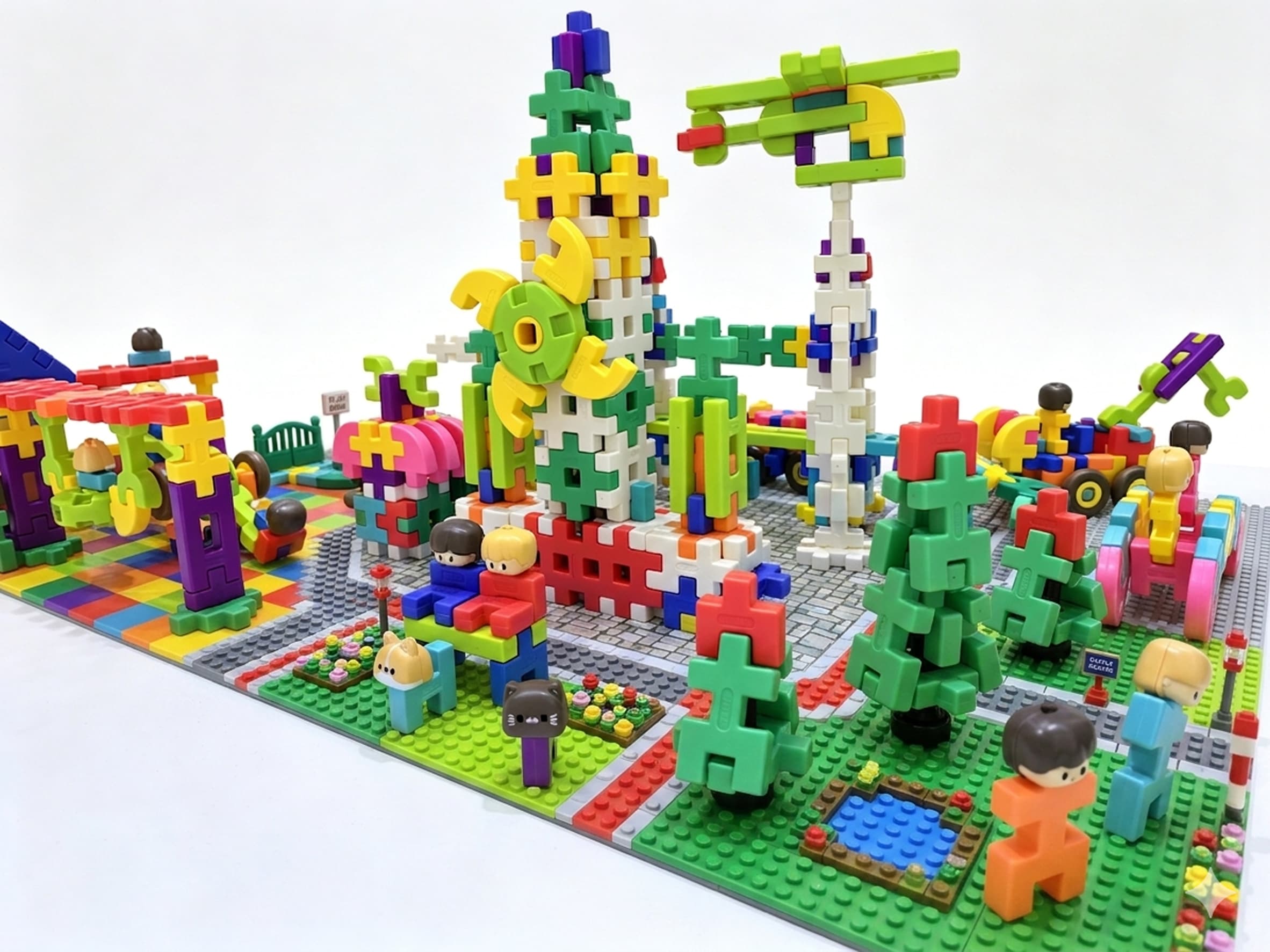
The best gifts under the tree are the ones still in rotation by spring. If you are shopping for open-ended building toys for ages 2–8, use this short checklist before you click “add to cart.” It keeps you focused on what actually matters to families: cleanup, durability, room to grow, and portability.
The five-question checklist
- Cleanup: Is there a realistic home for every piece after play? Loose bags become mystery spills.
- Durability: Will connectors survive repeated snaps from enthusiastic preschool hands?
- Progression: Can beginners feel successful while older siblings still find a challenge?
- Portability: Could this go to Grandma’s house without a rescue mission?
- Calm play potential: Does the toy invite focus without constant adult assembly?
Why a locking storage case is a “gift” to the whole household
Blocks are not messy by nature—they are messy by storage. A sturdy case that actually latches turns a beautiful rainbow set into something you reach for on rainy Tuesdays, not just birthdays. When relatives ask what to buy, “something with its own cleanup system” is an easy yes.
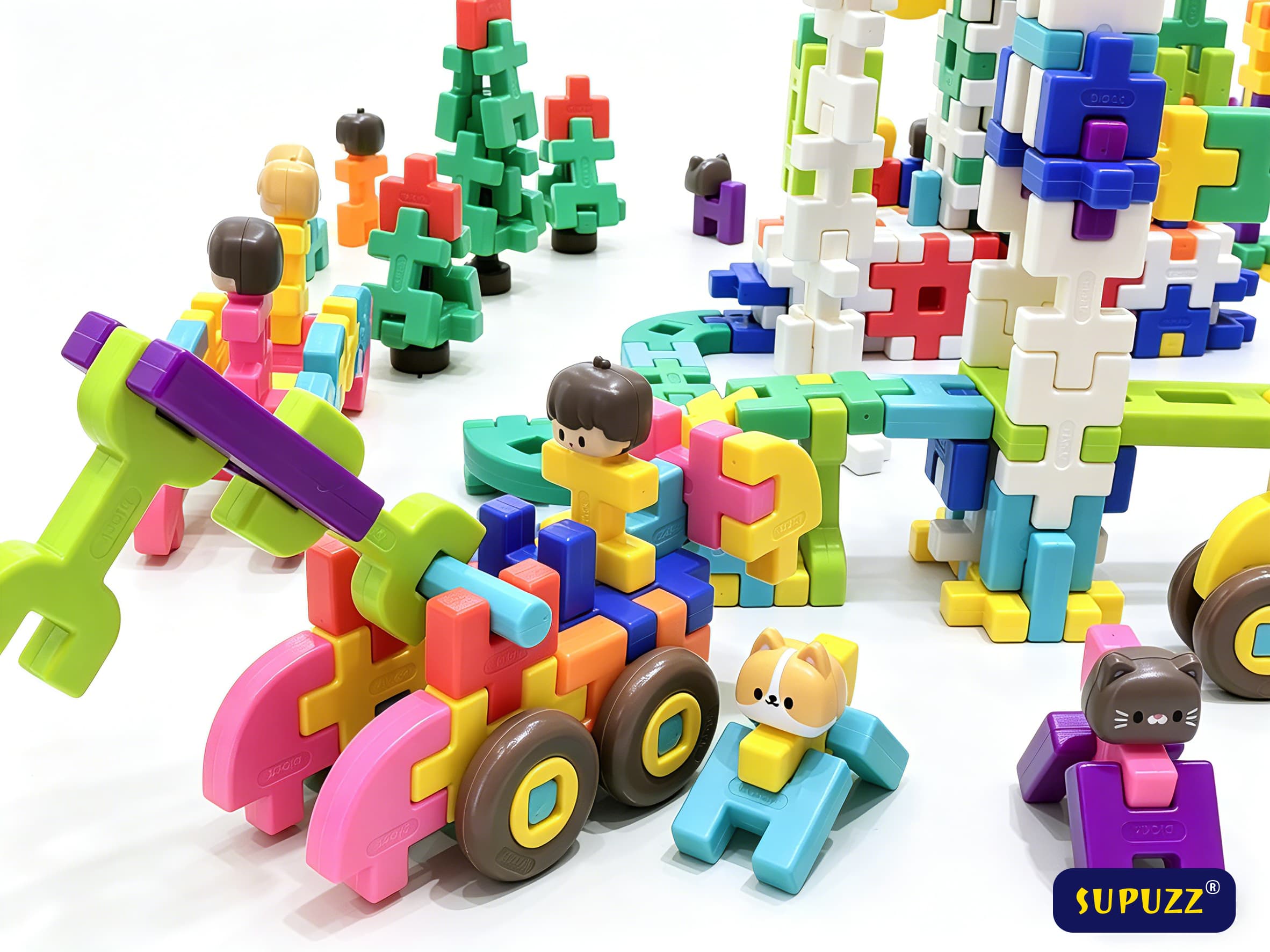
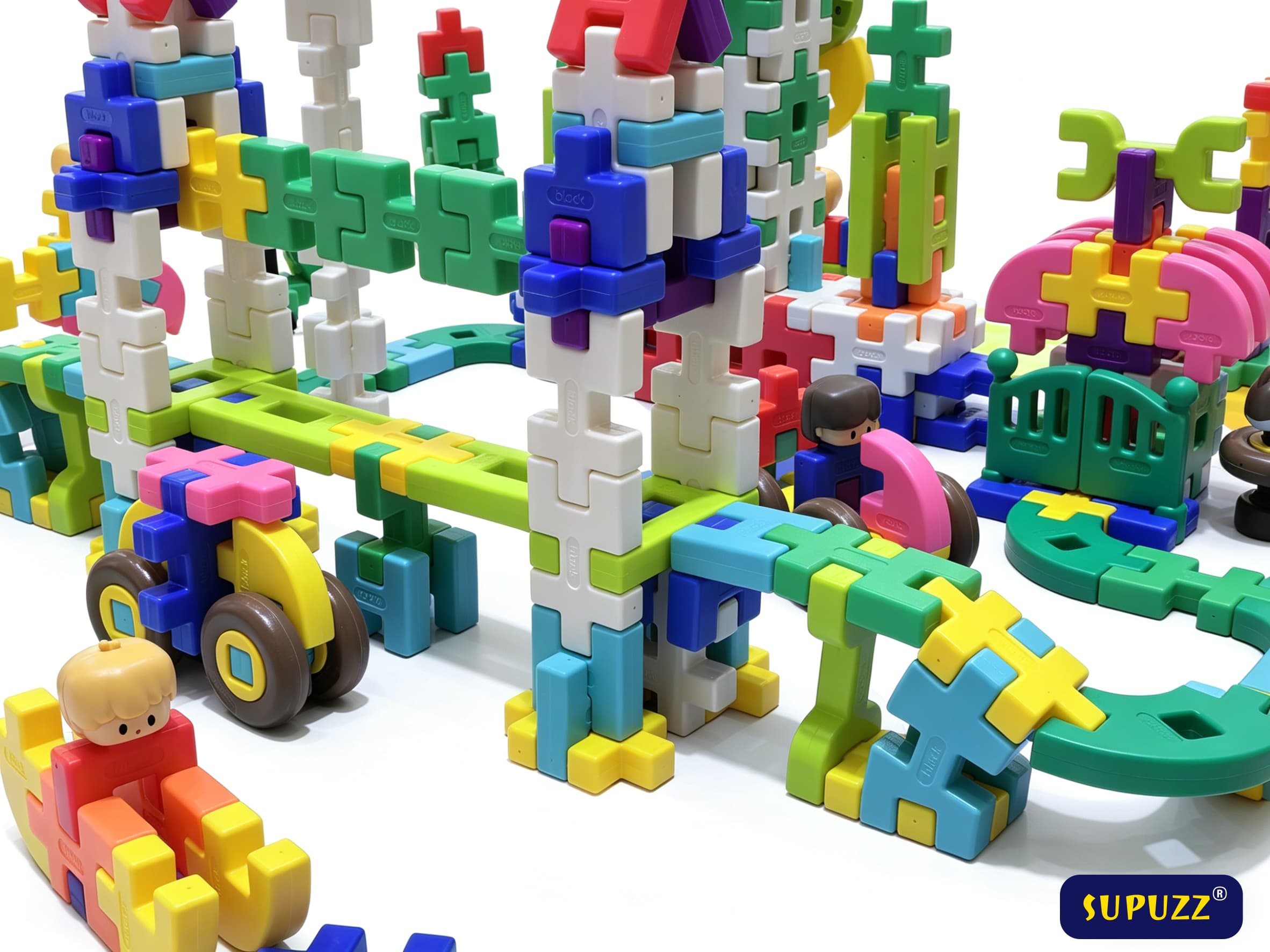
The SUPUZZ Premium Rainbow Building Blocks set is built around that idea: a locking storage case, durable waffle-style connectors, and builds that scale from simple stacks to more ambitious vehicles and structures—so the same SKU can span multiple birthdays.
Gift-ready on Amazon
See current price, ratings, and shipping options for the featured Premium Rainbow set.
Open Amazon listing redeemHow to present the gift so kids dive in immediately
Try a “first build together” ritual: sit side by side, narrate one simple goal (“let’s make a garage tall enough for this car”), then step back. Adults who model curiosity—not perfection—raise kids who treat mistakes as part of building.
For feature-level detail and inspiration photos, start with our Premium Rainbow Building Blocks overview, then continue to Amazon for purchase details.
❓ Frequently Asked Questions About Open-Ended Building Toys
Q: What makes a toy "open-ended" and why does it matter?
An open-ended toy has no single "right way" to play. Building blocks, for example, can become a castle, zoo, spaceship, or bridge. This flexibility stimulates creativity, problem-solving, and keeps the toy engaging for years rather than days.
Q: How do I choose the right building toy level for my child?
Start by matching the age recommendation: ages 2-3 benefit from larger, fewer pieces (L1), ages 3-5 can handle moderate complexity (L2), and ages 5-8 are ready for advanced builds (L3). Also consider your child's attention span and whether they prefer guided play or free building.
Q: Are building blocks a good gift for a 2-year-old?
Yes—when sized appropriately. SUPUZZ builds with large, easy-grip pieces that meet safety standards for ages 2+. At this age, focus on simple stacking and color-sorting activities rather than complex builds.
Q: How do building toys compare to screen-based STEM apps?
Physical building toys develop fine motor skills, bilateral coordination, and real-world spatial reasoning that screens cannot replicate. Research consistently shows that hands-on manipulation leads to deeper learning than passive screen interaction.