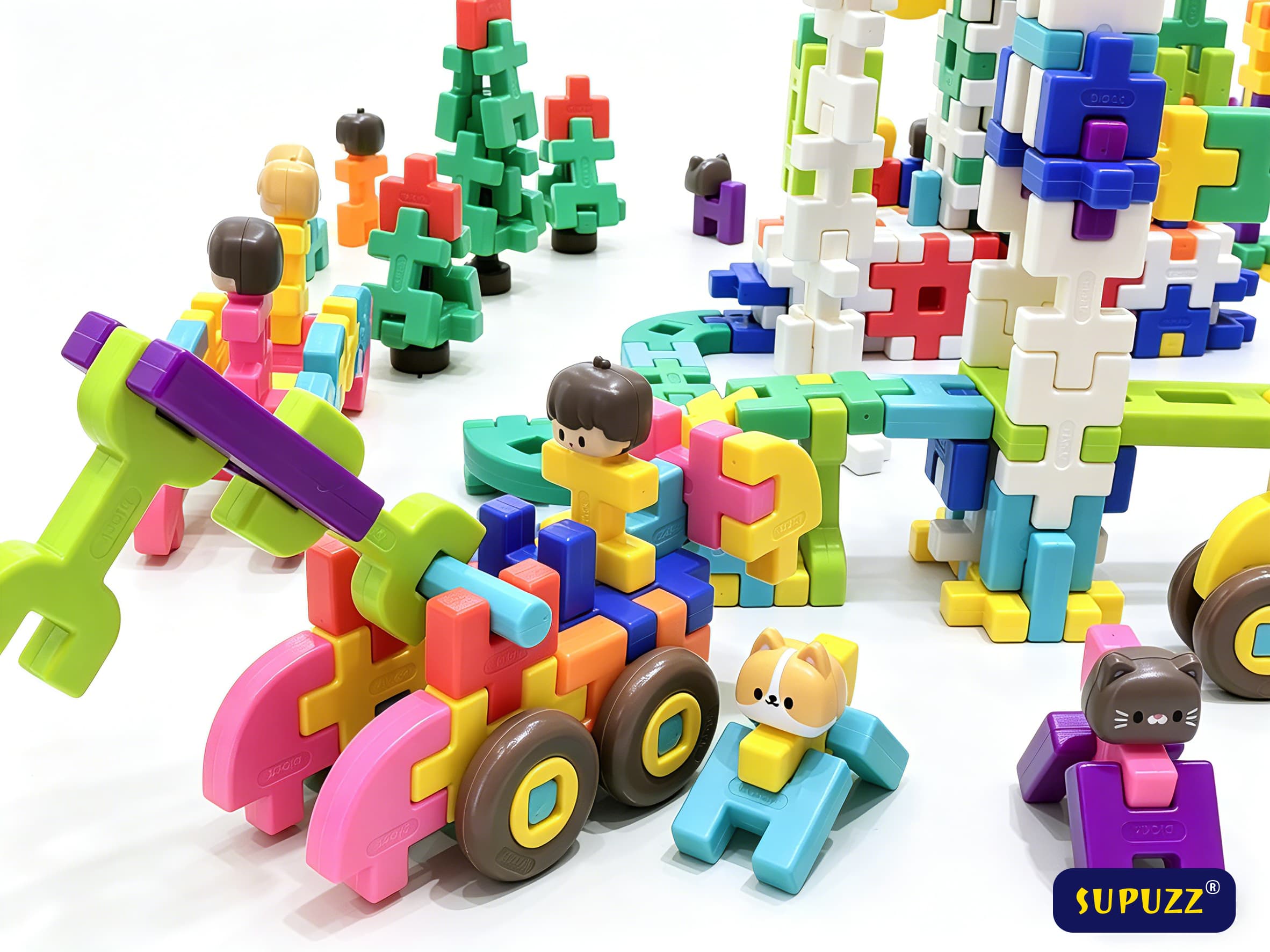
Walk into almost any preschool classroom and you will still find a tub of waffle-style interlocking blocks. That is not nostalgia—it is motor science. The same predictable snap that helped you build a “waffle tower” as a kid still helps toddlers practice bilateral coordination, grip grading, and early spatial reasoning.
The SUPUZZ Premium Rainbow Building Blocks set brings that classic play pattern forward with a durable, easy-snap feel and a progression-friendly build range for children roughly ages 2–8—so the toy does not age out after a single weekend.
What waffle blocks teach before “STEM” is even a vocabulary word
Long before kids say words like “engineering,” they rehearse the basics: stack, balance, brace, repeat. Waffle connectors reward small corrections. When a wall leans, a child adjusts width or adds a buttress. That loop is exactly how early problem solving feels in the body—not on a worksheet.
- Fine motor control: pushing pieces together without toppling the whole build.
- Spatial language: “tall,” “wide,” “corner,” and “through” show up naturally in sibling co-play.
- Persistence: a collapsed tower is low stakes; rebuilding is part of the game.
Why parents still reach for open-ended construction over one-and-done kits
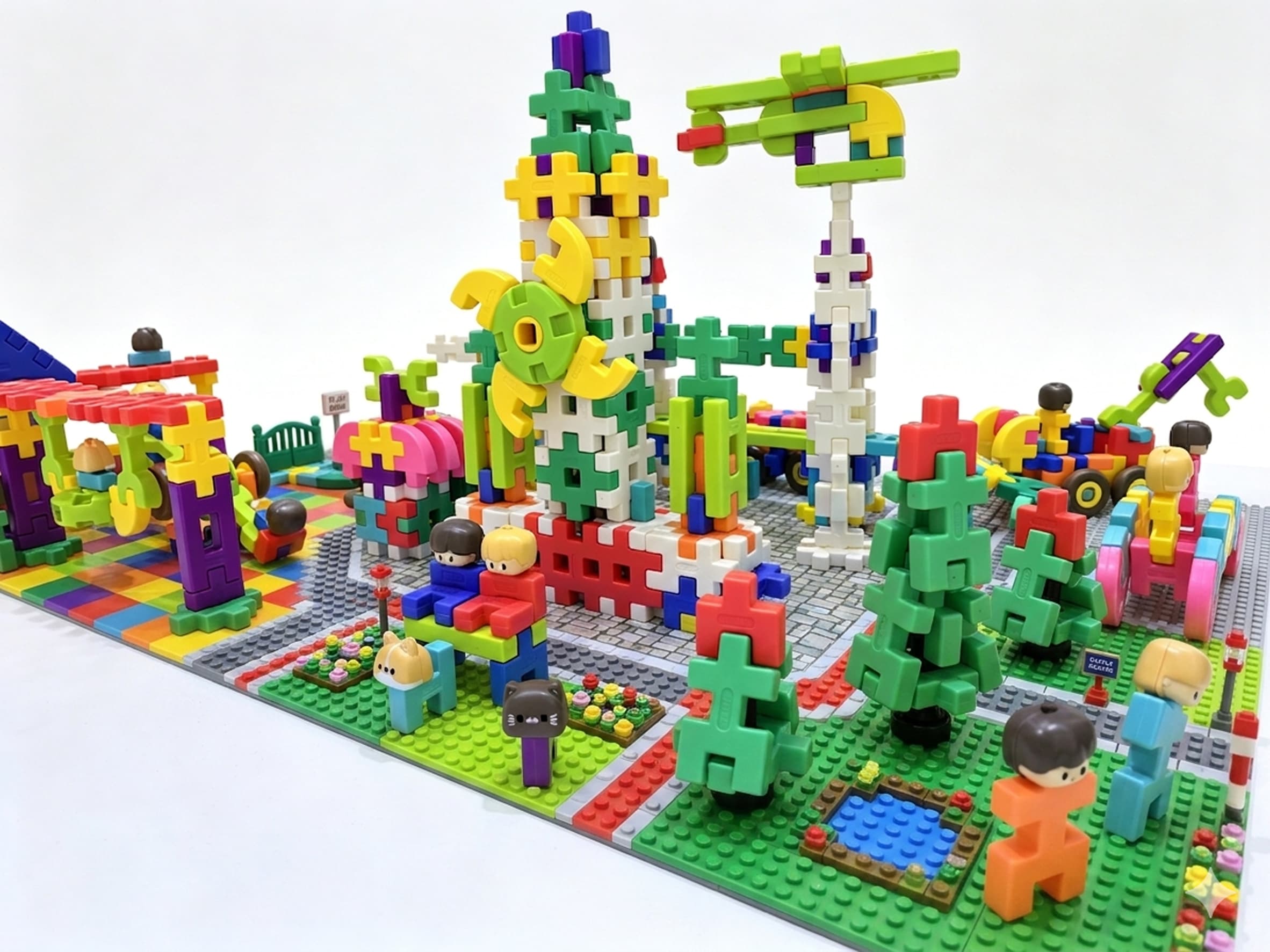
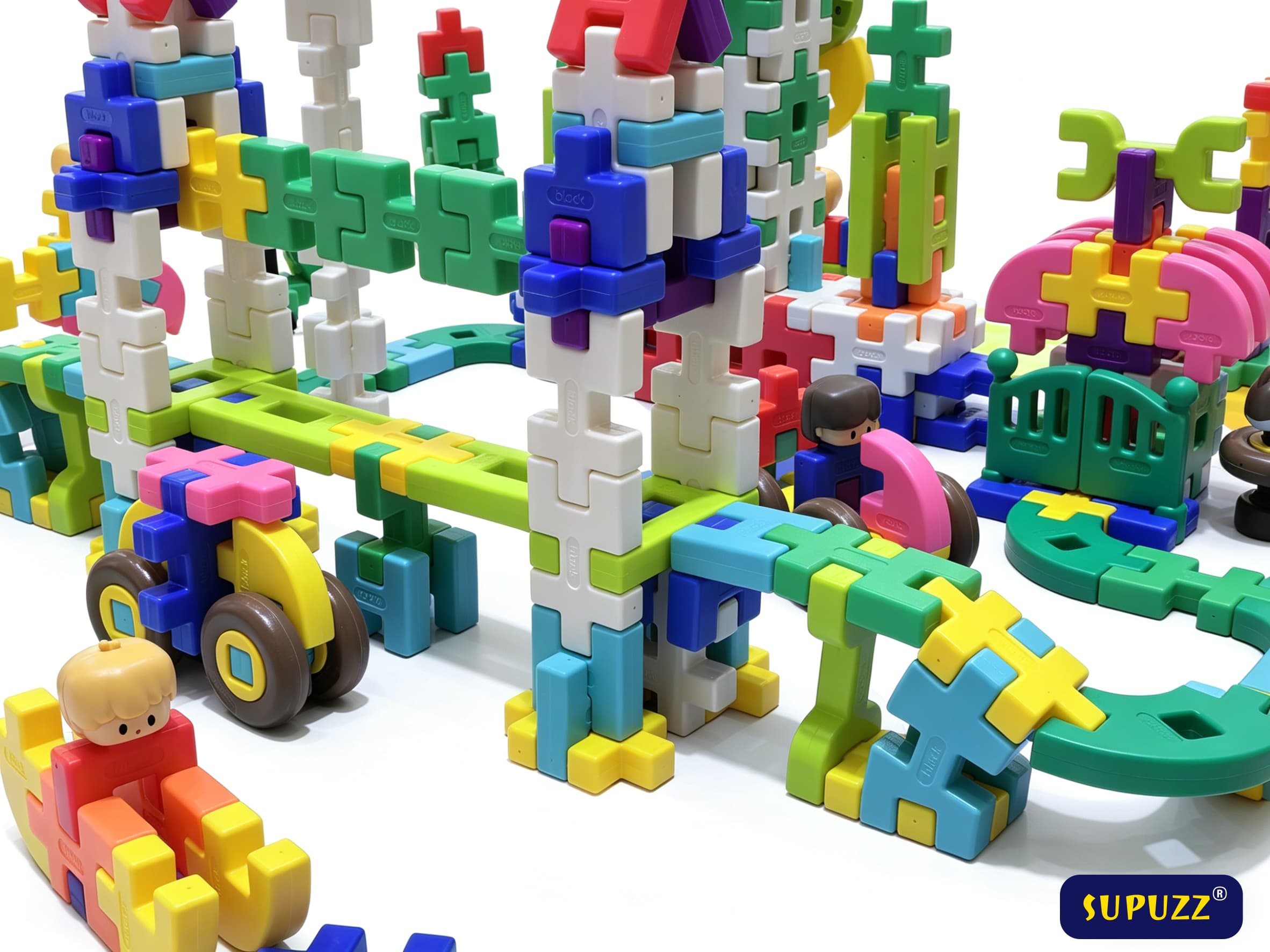
Single-use model kits can be magical on day one—and dusty on day seven. A generous rainbow palette invites sorting by color, patterning, and storytelling builds (zoos, garages, imaginary “pet playgrounds”). That variety keeps open-ended construction toys in rotation without constant adult reset.
When you are ready to keep pieces contained between sessions, a locking storage case matters as much as the blocks themselves. Cleanup is the difference between “we play with this daily” and “it lives in the closet.”
Shop the featured Premium Rainbow set
Same waffle-style play parents trust—updated for durability, progression, and portability.
View on Amazon open_in_newPair STEM language with what kids are already doing
You do not need a lesson plan. Try narrating what you see: “You made a stable base first—that is how engineers think.” Or invite a tiny design review: “What would make the bridge less wobbly?” Those micro-prompts attach vocabulary to motion, which is how STEM habits actually stick.
For a deeper product walkthrough—including progressive project ideas—read our full Premium Rainbow Building Blocks story, then come back to the Amazon listing for live pricing and availability.
❓ Frequently Asked Questions About Waffle Blocks & Toddler STEM
Q: Why choose waffle-style blocks over regular building blocks?
Waffle blocks have a wider connecting surface and a satisfying snap-fit that's easier for toddlers to align. They reward small corrections and naturally teach concepts like balance and stability through hands-on experimentation.
Q: What specific STEM skills do these blocks teach toddlers?
Bilateral coordination (using both hands), grip grading, spatial vocabulary (tall/wide/corner/through), early cause-and-effect reasoning, and persistence. These are the foundational skills that later translate to engineering and math readiness.
Q: Are waffle blocks safe for toddlers under 3?
SUPUZZ waffle blocks are made from BPA-free, non-toxic materials with larger-sized pieces. They're designed for ages 2+, but parental supervision is always recommended for the youngest builders.
Q: How does open-ended play differ from instruction-based building?
Open-ended play lets children create their own designs without following instructions. This type of creative freedom develops divergent thinking, imagination, and confidence—skills that one-and-done model kits can't replicate.